
Listen Up: The Jam
British teens had it all over American teens in the late-70s, sorry to say.

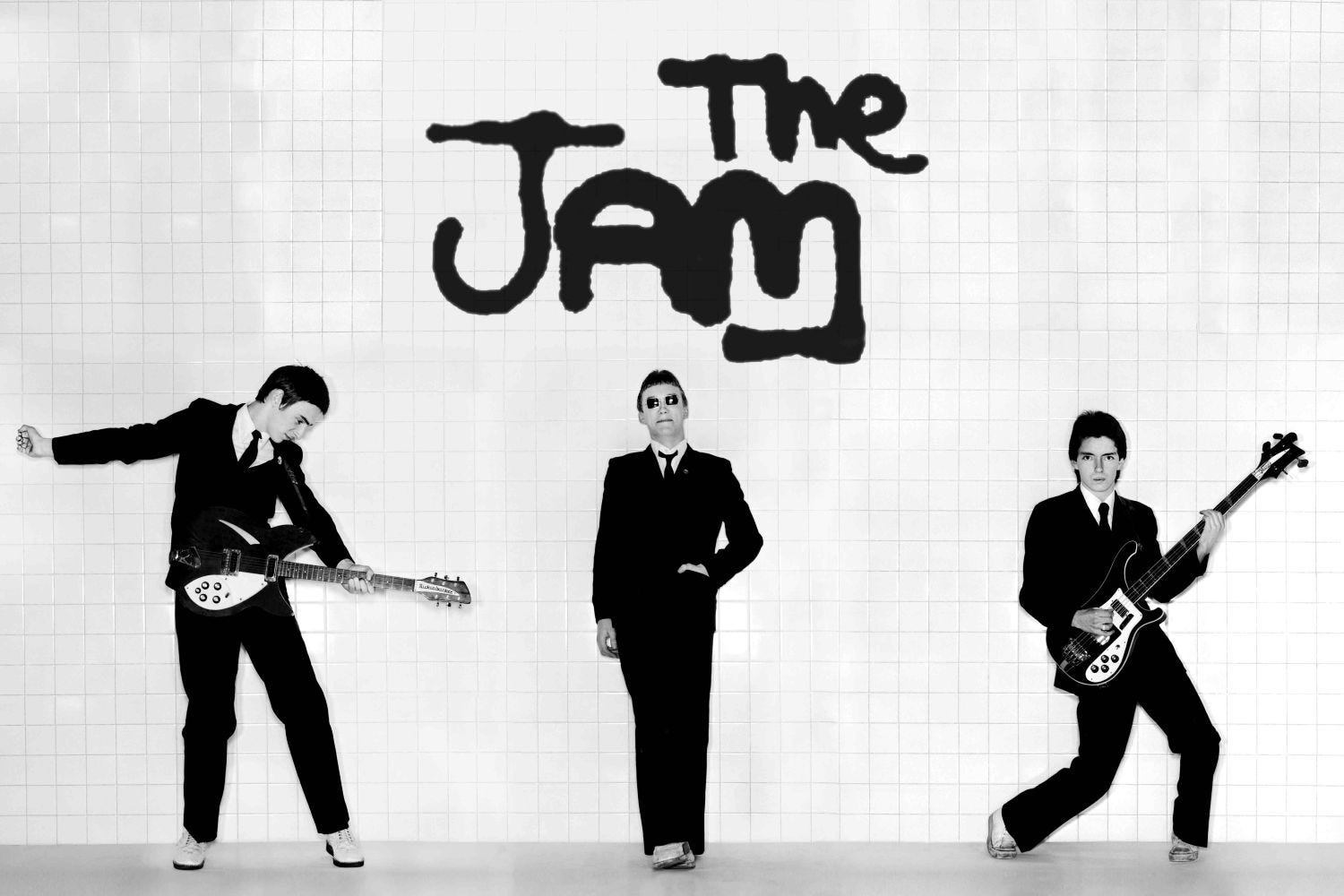
Although they were so immovably British in both form and content that they couldn’t get arrested on commercial American radio, the socially conscious punk-pop band, the Jam, was far and away the most popular group in England when they called it quits in 1982. And that massive success was supposedly why they broke up!
At the time, Paul Weller—the Jam’s lead singer, key songwriter, and maniacal guitarist—basically said that the group was winning every music award in every conceivable category, their albums and 45s shot to the upper reaches of the charts the moment they were released, and they could fill any hall in which they cared to play.
So, in a contrarian move for the ages, Weller decided that he and his bandmates, bassist-vocalist Bruce Foxton and drummer Rick Buckler, should part ways before they got too big for their tailored britches and could no longer convey their Angry Young Men message.
Better to quit, Weller figured, when there was nowhere to go but down. It seemed pretty nuts at the time, and I still wonder about it. Surely, there was more to the band’s breakup than that.
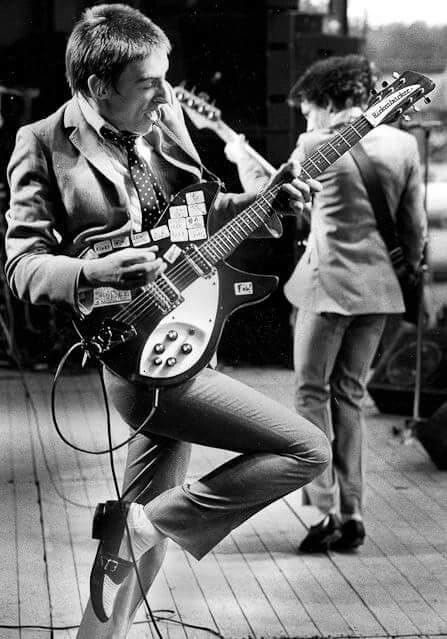
Weller was the kind of guy who’d write booming “let’s get together, people” anthems and repeatedly present himself as Jesus in an immaculately tailored suit, then do a “Who, me?” when the masses wanted a clue as to which direction they should charge.
His ego must have been a nightmare for his bandmates, and he loved to pose. But, man, he sure could write a musical call to arms. The Jam rocked as ferociously, if somewhat erratically as far as the songs went, as any group from the period. At the top of their game, these guys were plugged-in monsters.
They were nothing if not committed. Then they just sort of...uncommitted.
Like Bruce Springsteen, an artist with whom he shared more traits than were immediately apparent 40-odd years ago, Weller wore his rock & roll fandom on his sleeve and saw himself as the next step in a grand musical tradition. The Jam was at the forefront of the Mod revival that originally played out via bands like the Who, the Kinks, and Small Faces in the mid-1960s.
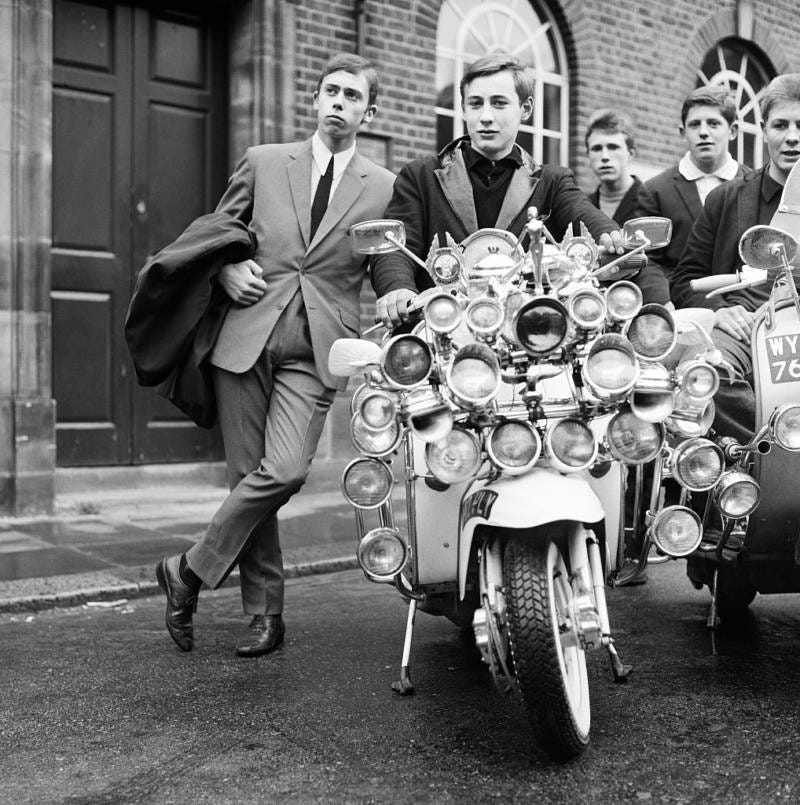
Originally, Mods were pill-head R&B fanatics riding decorated Vespas whose favorite bands accelerated and amplified American soul music to meet their dilated pupil needs. And they sported super-crisp threads while they did it.
In the Jam’s early days, Weller simply added a degree of savagery to the Mod beat that would have left even the Who cowering behind Moonie’s drum kit.
Unlike the straight-up punks who surrounded them, the Jam had no qualms whatsoever about covering Stax and Motown tunes, because that’s what the Who did. And, even more jarring to the safety-pin crowd, Weller shared Ray Davies’ rose-tinted fondness for a civil, post-blitz England that no longer existed and probably barely existed in the first place.
This, coupled with enormous record sales, set the Jam up for more than their share of derision from self-consciously nihilistic hipsters.
By now, that contempt seems rather idiotic, but so does ramming a sharp piece of metal through your cheek to prove your parents are boring. As annoying as Weller could sometimes be—see also, Pete Townshend—there was nothing milquetoast about the Jam once they started playing.
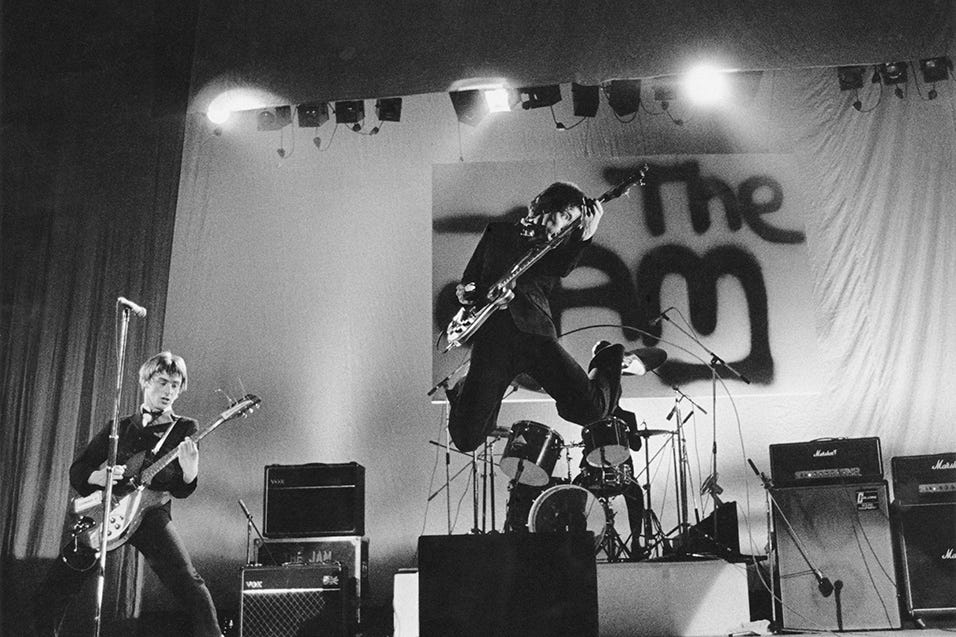
The above photo of Foxton leaping like an adrenalized jackrabbit was not a one-time-only event. When they were on stage, the Jam jumped a lot. I’m convinced Weller and Foxton run second only to Michael Jordan in being photographed in mid-air, with Charles Lindbergh rounding out the field.
This was utterly fitting, though, because the Jam’s sound was designed to get you off your ass. Weller was a showman, and, once he got going, he could convince damn-near anyone to hop around with him.
Need proof? Here’s a video of the Jam playing “In the City” on British TV’s So It Goes.
Give me one reason why that’s anything less than spectacular.
“In the City” is the Jam’s statement of purpose, although one of my more mild complaints about Weller is that he bluntly re-stated that purpose too often in other songs. These lyrics are exhilarating, though.
In the city there’s a thousand things I want to say to you
But whenever I approach you, you make me look a fool
I wanna say, I wanna tell you
About the young ideas
But you turn them into fears
In the city there’s a thousand faces all shining bright
And those golden faces are under 25
They wanna say, they gonna tell ya
About the young idea
You better listen now you’ve said your bit
And I know what you’re thinking
You still think I am crap
But you’d better listen man
Because the kids know where it’s at
In the city there’s a thousand men in uniforms
And I’ve heard they now have the right to kill a man
We wanna say, we gonna tell ya
About the young idea
And if it don’t work, at least we still tried
In the city
In the city
In the city there’s a thousand things I want to say to you
A bunch of pissed-off kids in Minneapolis need to learn this one right now and take it onto the street.
Were the Jam naïvely idealistic? Um, yeah— so was Springsteen, in the beginning, anyway.
But anyone who can urgently shout a phrase like “YOUTH EXPLOSION!” the way Weller does in “All Around the World” and not appear to be shouting “Fab with Borax!” is more than pulling his weight as a rock star. And the endless “whomp-whomp-whomp-whomp” of Foxton’s bass and Buckler’s drums is enough to convince anyone that the avenues will soon be filled with righteous teenagers carrying clubs and torches.
The line that fully redeems “In the City,” that adds a sense of encroaching melancholy and gives it more of a grounding in stark reality, is this: “And if it don’t work, at least we still tried.”
That degree of maturity was in short supply on the original punk scene, where having no answer whatsoever was usually viewed as an answer and admitting self-doubt was tantamount to being a pussy.
A couple minutes of sheer roar and release, with a heavy dose of hope tossed in amidst the wreckage is what great rock & roll is all about, and the Jam often pulls it off in high style. When your head and your heart are in the right place, especially if you’re 17 years old, it can make you feel like Superman.
At the risk of sounding like a cranky old-timer, it’s a deep, deep shame that new takes on this sort of commercial first-raising aren’t filling kids’ headphones nowadays. We really need it, but, to be fair, you could barely find it in the U.S. back when the Jam and the Clash were setting crowds on fire with it in England.
We were too preoccupied with Styx and Journey at the time.
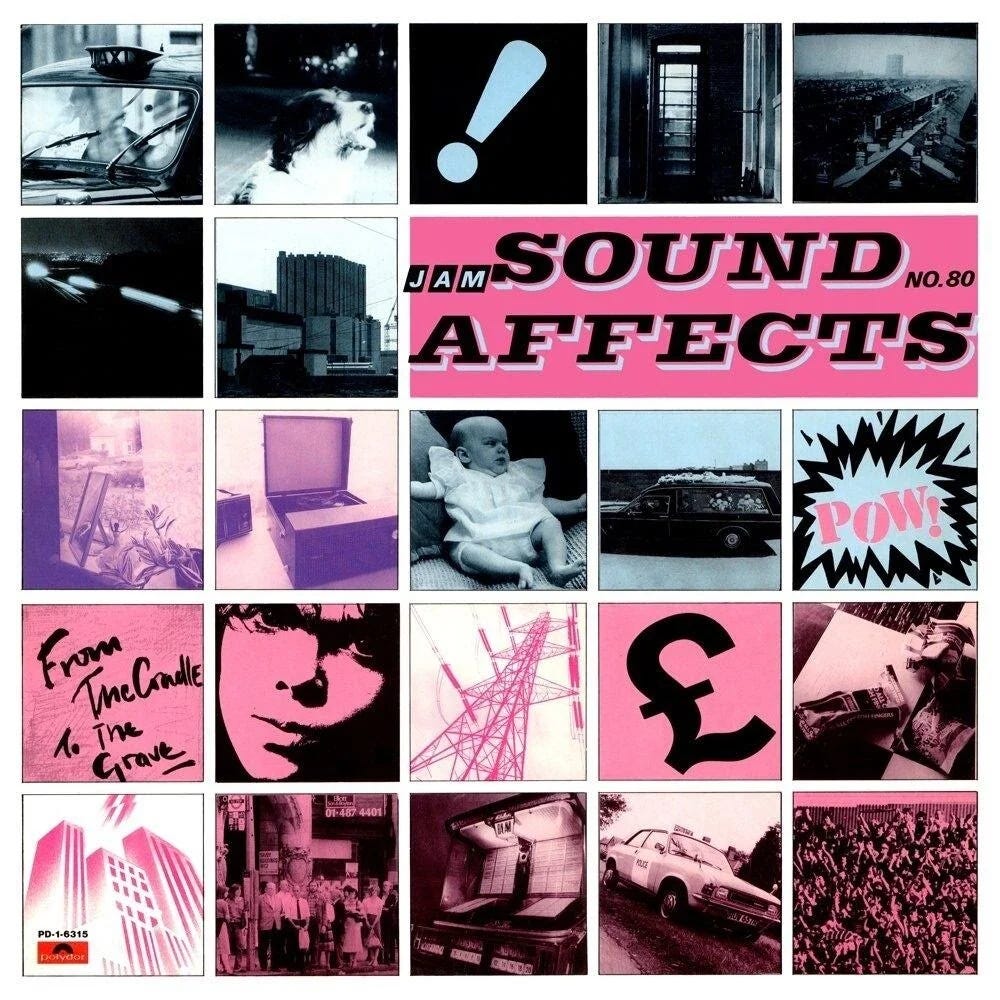
By the time the Jam released what Weller considers their best record, 1980s Sound Affects, it was no longer possible to pigeonhole the group as mere punk rockers or members of the New Wave, as it was starting to be re-labeled by nervous promo men.
Weller has said that Sound Affects was deeply influenced by the Beatles’ Revolver, which is more than apparent in the track “Start!,” with its bass line and guitar part lifted to a clearly suable degree from George Harrison’s “Taxman.” But, much more surprisingly, Michael Jackson’s glossy soul album, Off the Wall, was also on Weller’s mind when he was in the studio.
This is easily the most “produced” of the Jam’s albums. The studio itself is now an instrument, with the often dense tracks featuring everything from backward guitar effects to layered vocals. My favorite cut on the record is “That’s Entertainment,” an acidic burst of proletarian grief that’s catchy enough to strum its way into your unconscious and set up shop there.
Who knows why we connect with certain songs the way we do, but I very often find myself singing “That’s Entertainment” to myself while I walk the streets here in New York City. It’s a killer piece of work.
A police car and a screaming siren
Pneumatic drill and ripped up concrete
A baby wailing, stray dog howling
The screech of brakes and lamplights blinking
That’s entertainment
That’s entertainment
A smash of glass and the rumble of boots
An electric train and a ripped up phone booth
Paint splattered walls and the cry of a tom cat
Lights going out and a kick in the balls
I say that’s entertainment
That’s entertainment
Days of speed and slow time Mondays
Pissing down with rain on a boring Wednesday
Watching the news and not eating your tea
A freezing cold flat and damp on the walls
I say that’s entertainment
That’s entertainment
Waking up at 6 a.m. on a cool warm morning
Opening the windows and breathing in petrol
An amateur band rehearse in a nearby yard
Watching the telly and thinking ‘bout your holidays
That’s entertainment
That’s entertainment
Waking up from bad dreams and smoking cigarettes
Cuddling a warm girl and smelling stale perfume
A hot summers day and sticky black tarmac
Feeding ducks in the park and wishing you were far away
That’s entertainment
That’s entertainment
Two lovers kissing amongst the scream of midnight
Two lovers missing the tranquility of solitude
Getting a cab and traveling on buses
Reading the graffiti about slashed seat affairs
I say that’s entertainment
That’s entertainment
Amazing. If I’m willing to forgive that “tranquility of solitude” line that Weller crowbars in there, you know this one hits me hard.
The Jam’s last studio album, The Gift, was released in 1982 to middling critical acceptance, although the British public gobbled it up right on cue. This appeared to unnerve Weller, who wasn’t all that convinced himself. The record’s generally muddled content is temporarily clarified, though, by this rousing Motown pastiche entitled “A Town Called Malice.”
Even with that obvious hit single, The Gift suggested the end was near for the group, that the engine was finally sputtering. So Weller gathered together a bunch of soul horns and a girl backup singer, then unveiled a masterstroke that stands as one of the more compelling intentional farewells in pop music history.
“Beat Surrender” marches out all of the Jam’s key tropes, everything from exhortations to make your passion work for you and a synopsizing cry of “bullshit is bullshit, it just goes by different names,” while blasting it all home with a punchy brass section and a final amphetamine ramble into the mist. It also lit the way to Weller’s work with the Style Council, but with a lot more heat than he usually generated in that particular guise.
Beat surrender
(chorus)
Come on boy, come on girl
Succumb to the beat surrender
Come on boy, come on girl
Succumb to the beat surrender
All the things that I care about (are packed into one punch)
All the things that I’m not sure about (are sorted out at once)
And as it was in the beginning, so shall it be in the end
That bullshit is bullshit, it just goes by different names
(chorus)
All the things that I shout about (but never act upon)
All the courage and the dreams that I have
(but seem to wait so long)
My doubt is cast aside
Watch phonies run to hide
The dignified don’t even enter in the game
(chorus)
And if you feel there’s no passion
No quality sensation
Seize the young determination
Show the fakers you ain’t foolin’
You’ll see me come runnin’
To the sound of your strummin’
Fill my heart with joy and gladness
I’ve lived too long in shadows of sadness
My doubt is cast aside
Watch phonies run to hide
The dignified don’t even enter in the game
(chorus)
Wake me up with your amphetamine blast
Take me by the collar and throw me out into the world
Rock me gently and send me dreaming of something tender
I was brought here to pay homage
To the beat surrender
What a thrilling way to shut the door on a remarkable run as the darlings of British youth. This makes “The Long and Winding Road” seem like the last breath of a bunch of crybabies, which the Beatles may well have been when they finally collapsed. At least the Jam got out before they started romanticizing their own weariness.
And now that the boys have had a cigarette break, let’s bring them out for one last encore. Feel free to get up and dance.
Thank you! The management would like to remind you not to forget your jackets and purses on the way out.
If you care to delve deeper into the Jam, start with “Snap!” (2006), one of the finest greatest hits collections I’ve ever listened to. It includes an acoustic demo version of “That’s Entertainment” that’s strangely spooky and every bit as great as the studio version. If you want to go for entire albums, I’d suggest you start with “Setting Sons” (1979) and, of course, “Sound Affects” (1980), but there are at least a few hellacious songs on all the studio releases.
You're so right about British teens, honestly. WAY better taste in the late 70s. I love this band. Great post.
What's even more amazing about those "Top of the Pops" appearances is a) they appear to be lip-syncing (perfectly, I may add) and b) the segues from the blow-dried, very '70s hosts and other acts. The Jam really were ahead of their time.