
I Flipped for Flip!
Flip Wilson, that is.

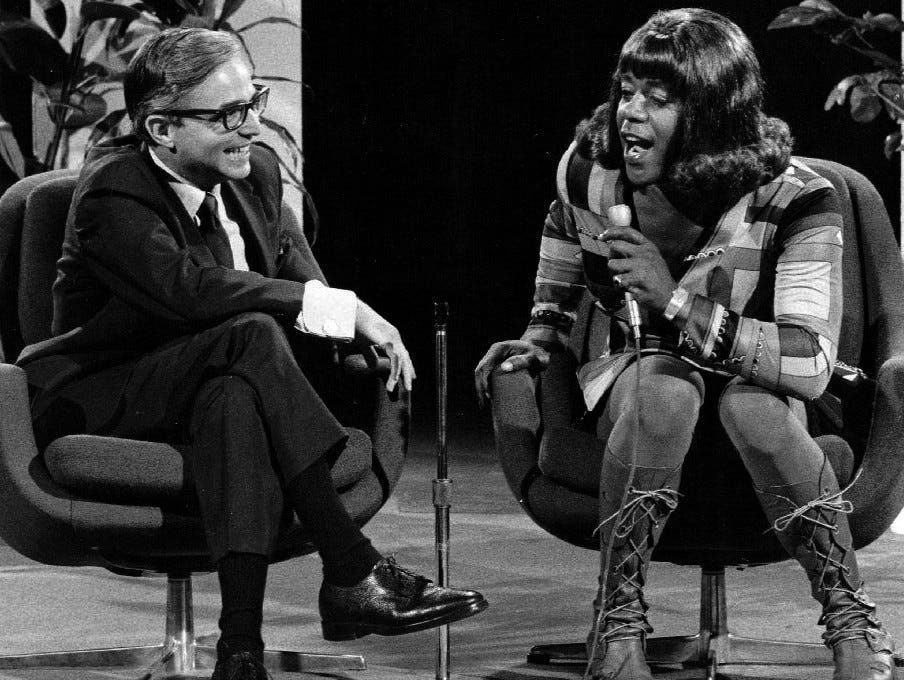
That’s Geraldine Jones in 1971, wresting control of an interview from author and sex therapist Dr. David Reuben.
At this stage of the game, I can understand your not knowing who David Reuben was (he wrote Everything You Ever Wanted to Know About Sex, if you’re ever on Jeopardy), but it really bothers me that you could be unfamiliar with Geraldine, or, to be more specific, with the groundbreaking comedian playing her, a man named Flip Wilson.
When I was eight years old, I thought Flip Wilson was the shit, and so did the rest of America. That Wilson’s name is now packed away in the mothballs of baby boomers’ memories seems a real injustice.
He deserves far better than that.
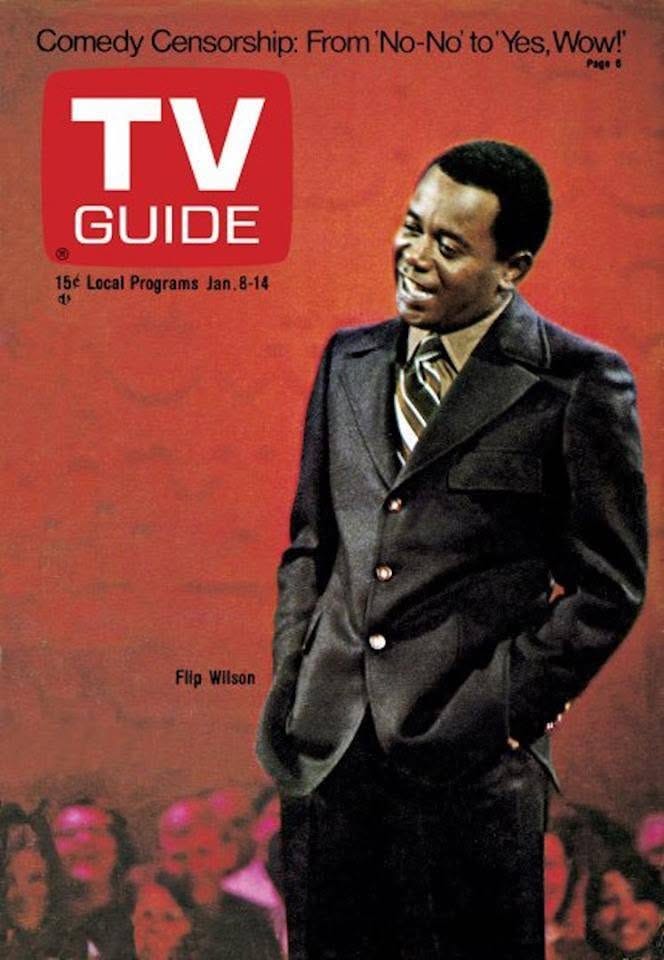
The fact of the matter is, for several years in the early 70s, Flip Wilson was the king (and queen, as the character’s case may be) of primetime variety programming. My mom used to let me stay up later on Thursday nights just to watch him.
I was a vocal fan.
Wilson was the first Black comedian to host his own network TV show, and his gracious but still hip and unapologetic Blackness was initially a topic of discussion in newspaper op-ed pieces. Soon enough, though, he was merely just Flip, and I’m sure more than a few racists forgot who they were dealing with while he cackled and cavorted with his guest stars on Thursday nights.
The Flip Wilson Show was a cash cow for NBC, with Wilson’s ingratiating playfulness being the key reason for its success. But Wilson was a far more complex, bruised individual than he appeared to be. After unexpectedly taking himself off the air in 1974, he all but disappeared from sight.
Aside from an occasional movie cameo or TV commercial and a couple of very quickly failed sitcoms, he was pretty much gone for good after having been one of the biggest names in show business.
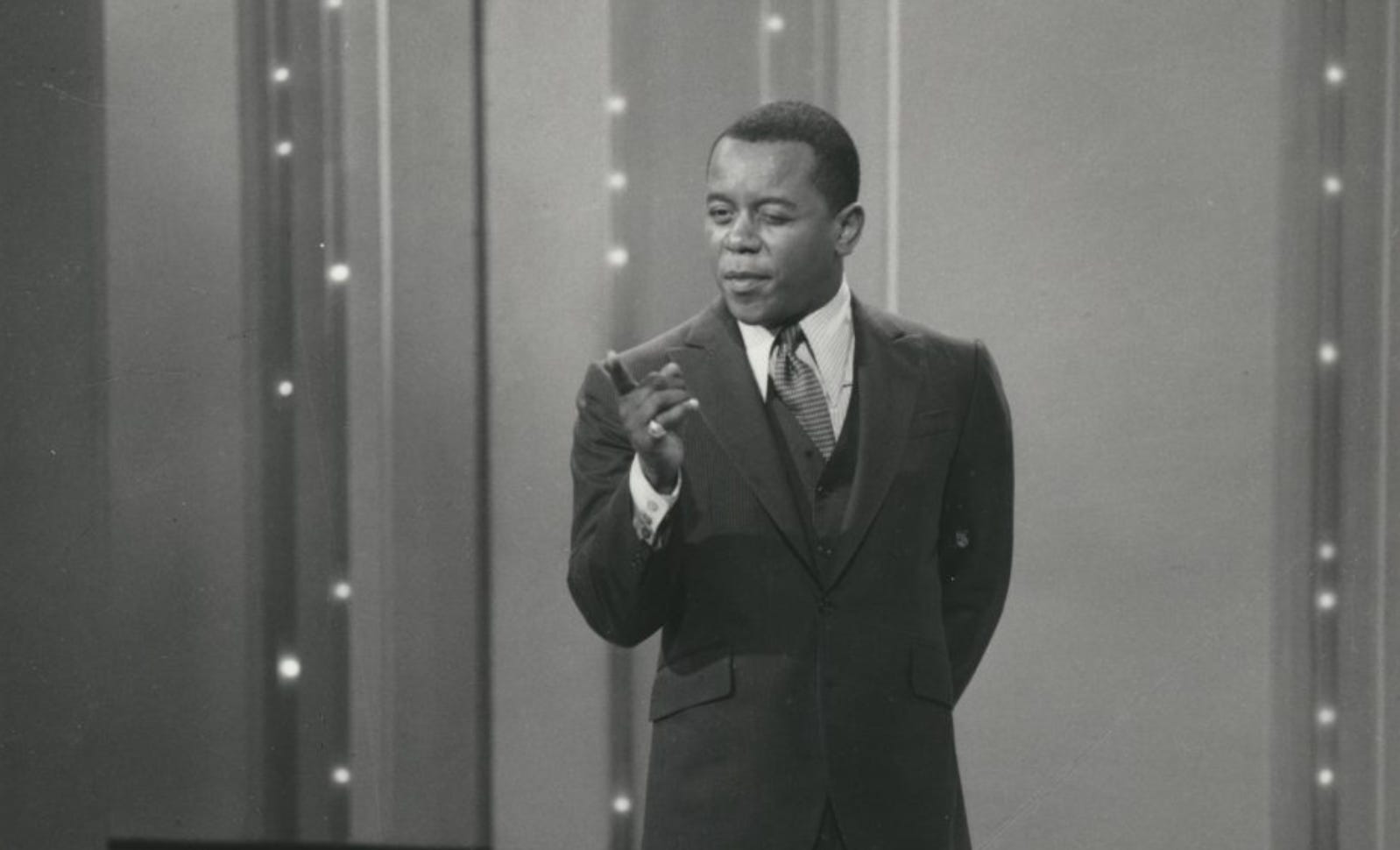
Clerow Wilson was born in Jersey City, NJ, in 1933; he had nine siblings. When his father couldn’t find work and his mother abandoned the family, young Clerow bounced around to various foster homes and reform schools.
In 1950, he lied about his age in order to join the military and escape this dire situation, but you get the sense his childhood was forever with him. The people who worked on his show noted that Wilson had real trust issues and was a control freak, which doesn’t come as a huge shock, considering.
After a stint in the Air Force, where his natural sense of humor was so popular that commanding officers had him tour bases to cheer up his fellow servicemen, Wilson decided to give standup comedy a shot. (He got his nickname when the other guys in his barracks said he was always “flipped out.”)
For almost fifteen years, Wilson earned a living playing for segregated Black audiences on what was known as the Chitlin’ Circuit, where comedians like Redd Foxx and Dick Gregory, among many others, also got their lengthy starts before reaching nationwide fame. Wilson eventually became a regular at Harlem’s famous Apollo Theater.
“Those Black audiences in the little weekend clubs were the toughest I’ve ever played for,” Wilson later said. “With all the trouble Black people have, they try to forget on weekends. You’ve got to be good to make them laugh.”
Performing in a manner somewhat reminiscent of Bill Cosby, Wilson told funny, relatable stories rather than punchline-focused jokes. A drummer wouldn’t have known when to nail a rim shot behind him.
This was a new development in standup, and Flip excelled at it. He had a charming, casual manner that caught the eye of broadcasting giant Ed Sullivan, whose attention any comedian would have been happy to catch, as Sullivan hosted the single most watched TV show in America.
Flip would appear on The Ed Sullivan Show eleven times, gaining new fans with each performance.
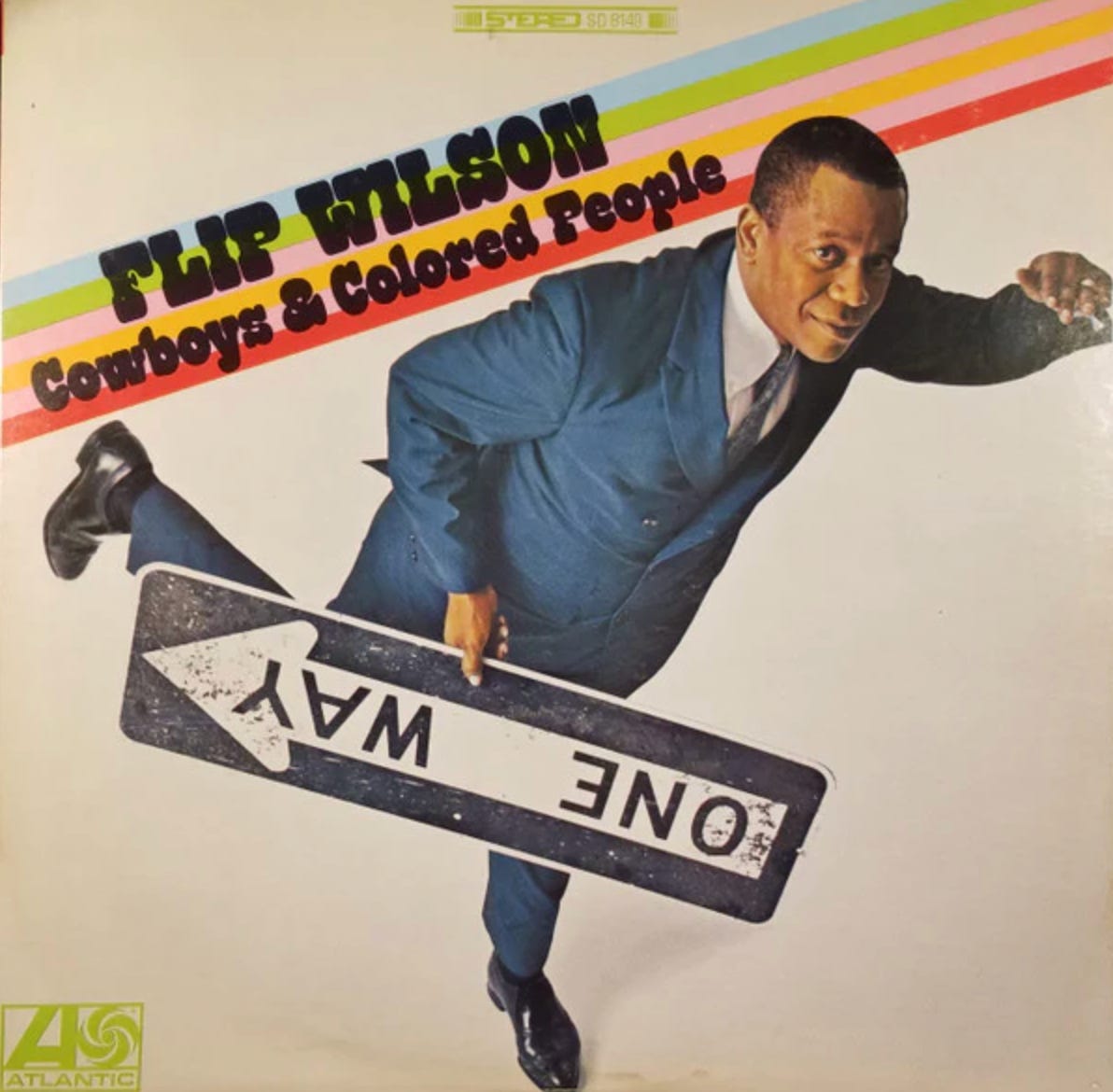
Soon enough, he was a regular guest on The Tonight Show, where he was a favorite of Johnny Carson—when Wilson guest-hosted the show one night in 1967, he interviewed Jimi Hendrix—and appeared several times on Rowan & Martin’s Laugh-In. He also recorded a string of successful comedy albums for Atlantic Records (check out the antiquated title on the above release.)
After the ratings success of a stand-alone Labor Day TV special, NBC offered Wilson his own sitcom...but he refused to take it!
In a pretty astounding move, considering the circumstances, he said he wanted to do a variety show or nothing because he knew he could do that. He also knew how badly the network wanted him, and he was prepared to walk if the higher-ups didn’t give him what he wanted!
NBC finally agreed to his demands, and The Flip Wilson Show was born.
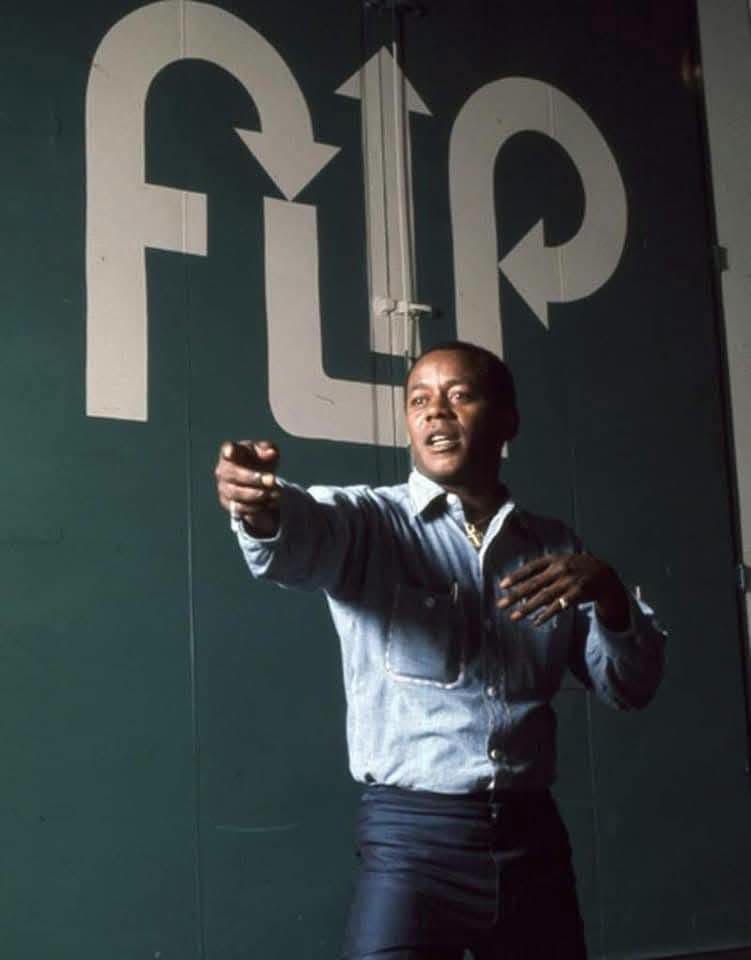
Wilson was no dummy. He negotiated the rare position of being the creator, producer, and star of his own show. He also landed the program’s lucrative syndication rights. Not even Dean Martin and Carol Burnett had managed that!
Initially, Wilson wanted his old Chitlin Circuit buddy, a then very troubled Richard Pryor, on his writing staff, but that was a bridge too far for NBC...at first, anyway. Wilson would get Pryor later. He did, however, sign George Carlin.
That’s a pretty good writers’ room.
The Flip Wilson Show became the second most-watched program in America behind All in the Family (by the second season, Flip was regularly pulling in 40 million viewers), and he had the clout to bring the greatest Black entertainers in the country to prime time on a weekly basis.
So that’s what he did.
Big-name white entertainers were welcome, of course, and you got plenty of them. Burt Reynolds, Bing Crosby, Lily Tomlin, Lucille Ball, Tony Randall, Lee Marvin, Ed Asner, etc. NBC said people were calling them to make guest appearances; they didn’t have to recruit anyone.
But a list of legendary Black stars who shared the stage with Wilson over the course of just four seasons is astonishing. I know this is long, but it’s worth noting: Ella Fitzgerald, James Brown, Muhammad Ali, Louis Armstrong, Moms Mabley, Richard Pryor, Lena Horne, Mahalia Jackson, Stevie Wonder, Harry Belafonte, the Jackson Five, Ray Charles, Curtis Mayfield, Cicely Tyson, Aretha Franklin, Gladys Knight & the Pips, the Pointer Sisters, Sammy Davis Jr., Redd Foxx, Johnny Mathis, the Temptations, and the Supremes.
And that’s not even all of them!
Plopping down in front of The Flip Wilson Show on Thursday nights was a learning experience for a kid growing up in a small Alabama town where Black people—unless they played football for Auburn or Alabama—were routinely viewed as something other than “normal.”
Flip’s guests sure seemed normal enough to me when I was watching. In fact, I really liked them. Everyone looked great, and they were quick-witted and self-deprecating.
They weren’t strange visitors from another culture. We shared a culture.
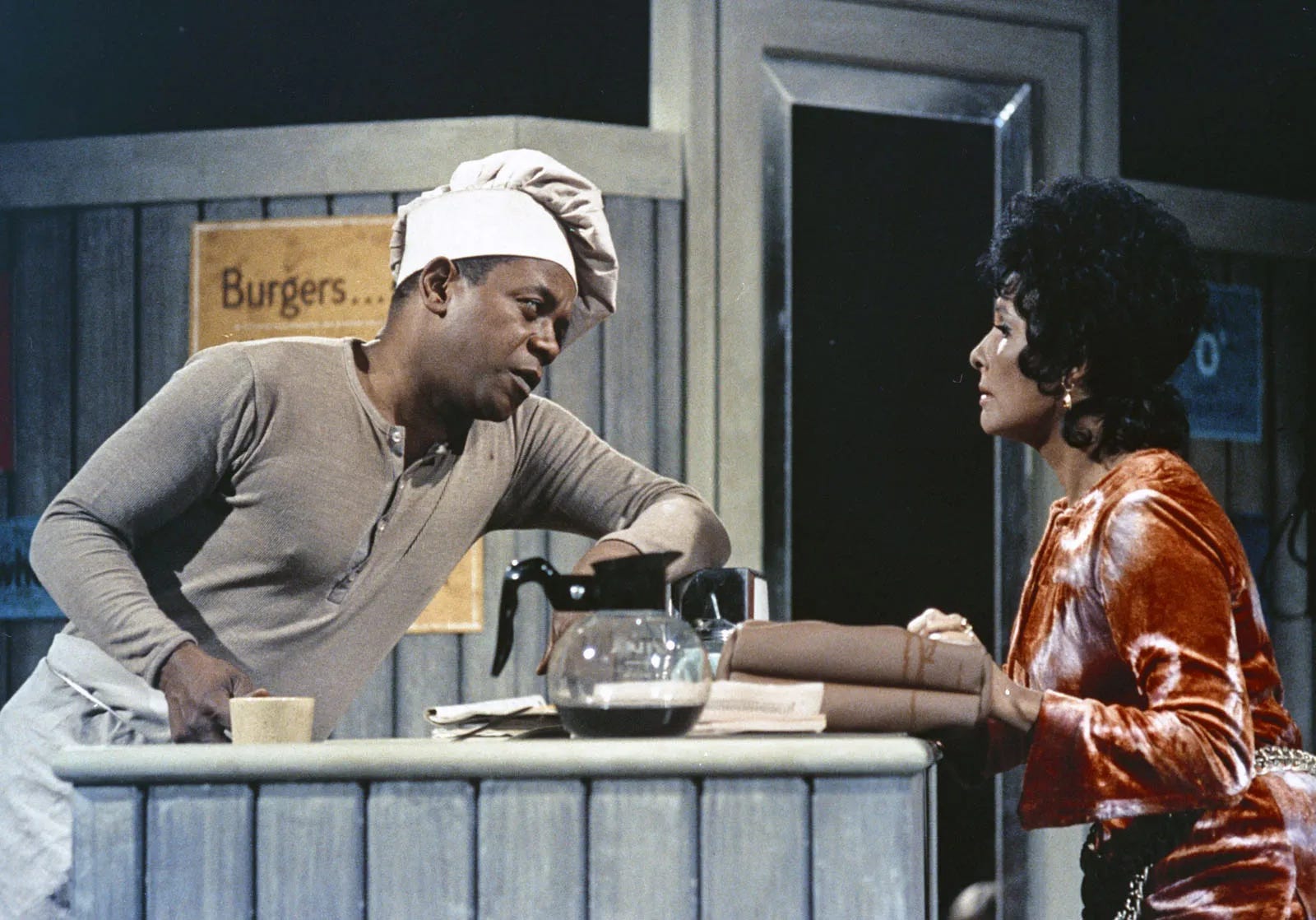
Wilson had great rapport with his co-stars; there was a sense of joy about the show. You could tell he delighted in his own antics during their skits together, and his enthusiasm was contagious. Guests often cracked up at him.
One recurring character was Reverend Leroy from the Church of What’s Happening Now, a con man preacher who coined the then-popular catchphrase “The devil made me do it!” But Wilson also launched a straight-shooting young woman named Geraldine Jones on the unsuspecting public...
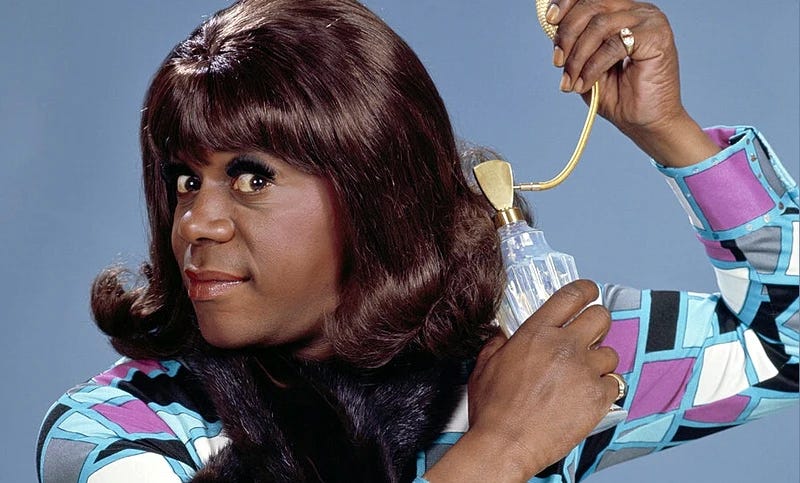
And Geraldine was a star. For a while there, she was practically America’s new It Girl.
Nowadays, cross-dressing humor can be viewed askance, but there was nothing demeaning or derogatory about Flip’s embodiment of Geraldine. He said that he based the character on the way his sister used to clown around when she was getting dolled up for a big date.
Geraldine, Wilson said, “demands respect, and she’s never asking for favors. Geraldine’s liberated— that’s where she’s at. Everybody knows she don’t take no stuff.”
It’s fitting that another Flip-generated national catchphrase was Geraldine’s “What you see is what you get!” She was hiding nothing and boldly announced her intentions.
Here’s a choice display of Geraldine’s uninhibited charms, featuring a very entertained Ray Charles (Don Rickles is also on hand, seeming like he was told he’d be in the skit moments before hitting the stage.)
That’s The Flip Wilson Show in a nutshell. It was always like that. Everybody seemed to be having a blast together.
When Pryor was on the writing staff, he’d complain that Wilson’s humor wasn’t angry enough for the times, and he wasn’t subtle about his distaste, even after Flip took a stand to get NBC to hire him. But Wilson wouldn’t have had a show for very long if he had performed with the degree of racial pique that Richard Pryor did.
Years later, NBC yanked Pryor’s own show after a mere four episodes. So there you go.
Surely, it was enough for Wilson to be hilarious and likable, and his writers repeatedly made references to Black culture, both overt and subtle. He was the first to do this and was breaking down barriers, regardless of whether or not Richard Pryor thought he should be orchestrating weekly confrontations with white viewers.
“I do these characters because they’re what I know,” Wilson said in a 1972 Time magazine interview. “But people are just people to me. The way I see it, I don’t have to think Black or not think Black. I just have to entertain. I’m just a comic.”
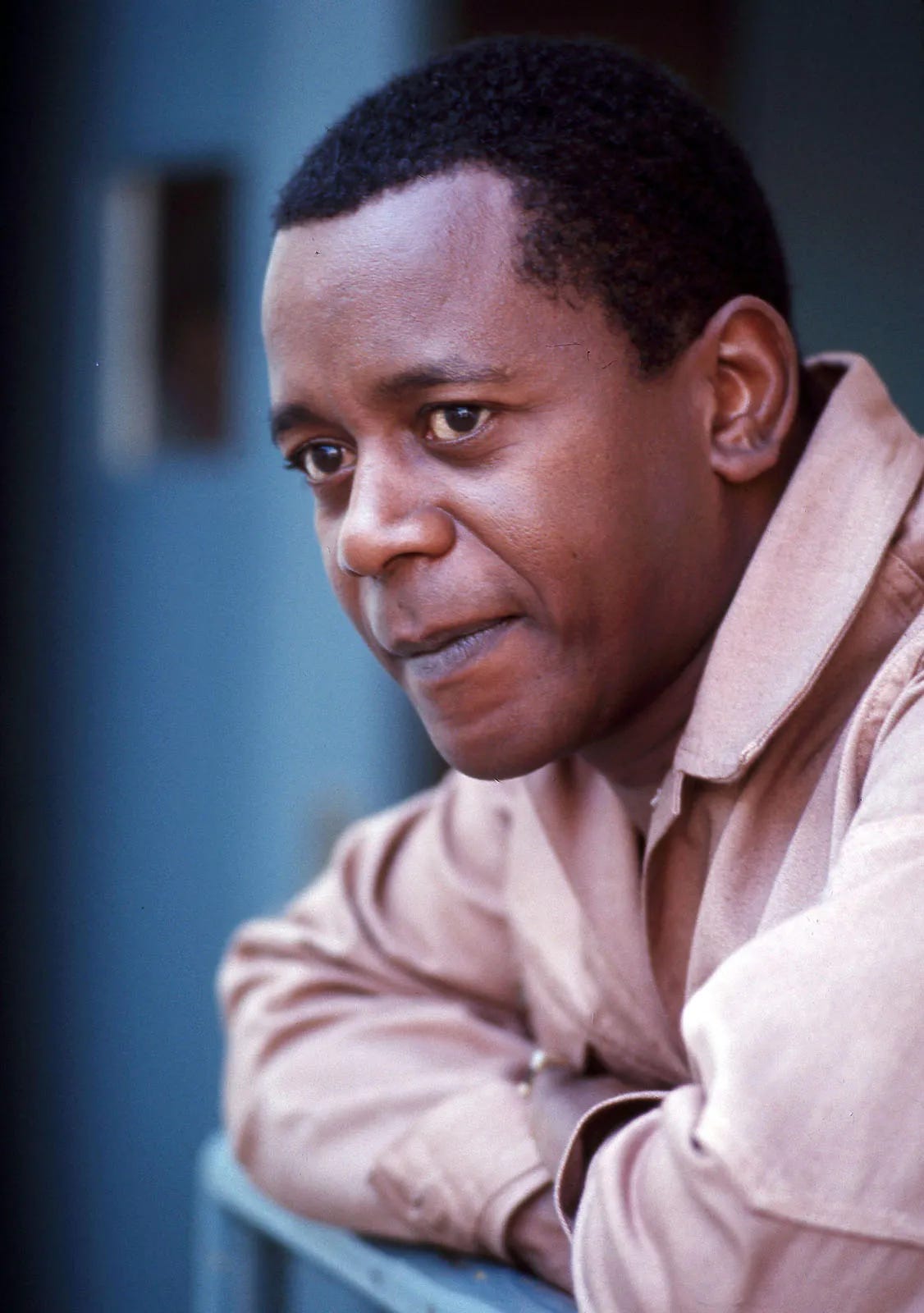
And then the fall.
Wilson obsessed over details concerning the show; he once bought a different doorbell for NBC’s sound effects department because he didn’t like the one they were using in his skits! This degree of focus, and wearing so many different hats while creating an hour-long TV show every week, finally wore him down to a nub.
Never an angel, he used recreational drugs for much of his adult life, starting when he was in the Air Force. Smoking too much pot and snorting too much coke in his off hours finally became an issue. His ego was out of control, and he had easy access to anything he wanted.
When his good friend, the singer Bobby Darin, died at the age of 37, leaving behind a young son, Wilson decided to bow out of the show and focus on developing a real relationship with his own children. Or at least that’s what he said. Ratings were slipping, and he may have also wanted to quit before he got canceled.
So he told NBC he was hanging it up, and The Flip Wilson Show was over in 1974, just four seasons after it had launched him to superstardom.
It didn’t necessarily seem like the public was done with Flip Wilson. TV shows eventually get canceled. It was more like Flip Wilson was done with the public. Unfortunately, he also seemed done with himself.
The drug issues did not subside in the ensuing years. He was even arrested for cocaine possession at LAX in 1981 (the case was dismissed for technical reasons in 1984, but he could well have gone to jail.) The only time he really felt a sense of control was when he was onstage, but he was no longer drawn to show business, and he had earned more than enough money to avoid working.
He was tired of the pressure and the hustle, and he encouraged his kids to start smoking pot with him.
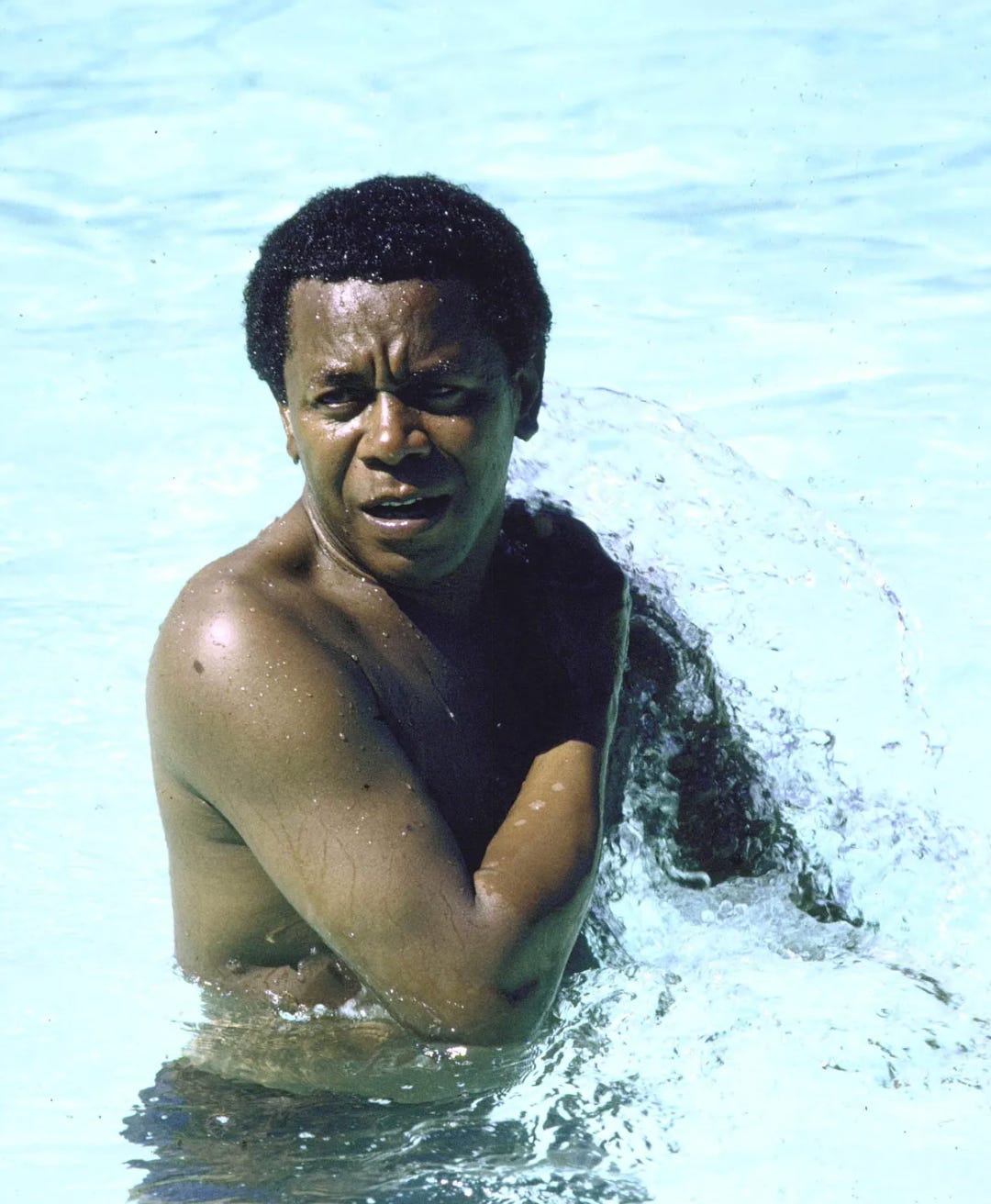
The latter part of his life was a haze of drugs, women, blowing money—at one point, he got into racing hot air balloons!—playing in golf tournaments, driving cross-country in luxury vehicles, and treating his family like second-stringers, if that. Sadly, his son, David, was paralyzed from the shoulders down in a 1993 motorcycle wreck, which didn’t exactly slow Flip’s guilt or drug intake.
Flip Wilson died of liver cancer on November 25, 1998, in Malibu, at the age of 64. He had been a trailblazing performer, but he found it easier to make people laugh than to live his own life with a sense of purpose and connect with the people who loved him.
I still do what I can to keep the memory alive, though.
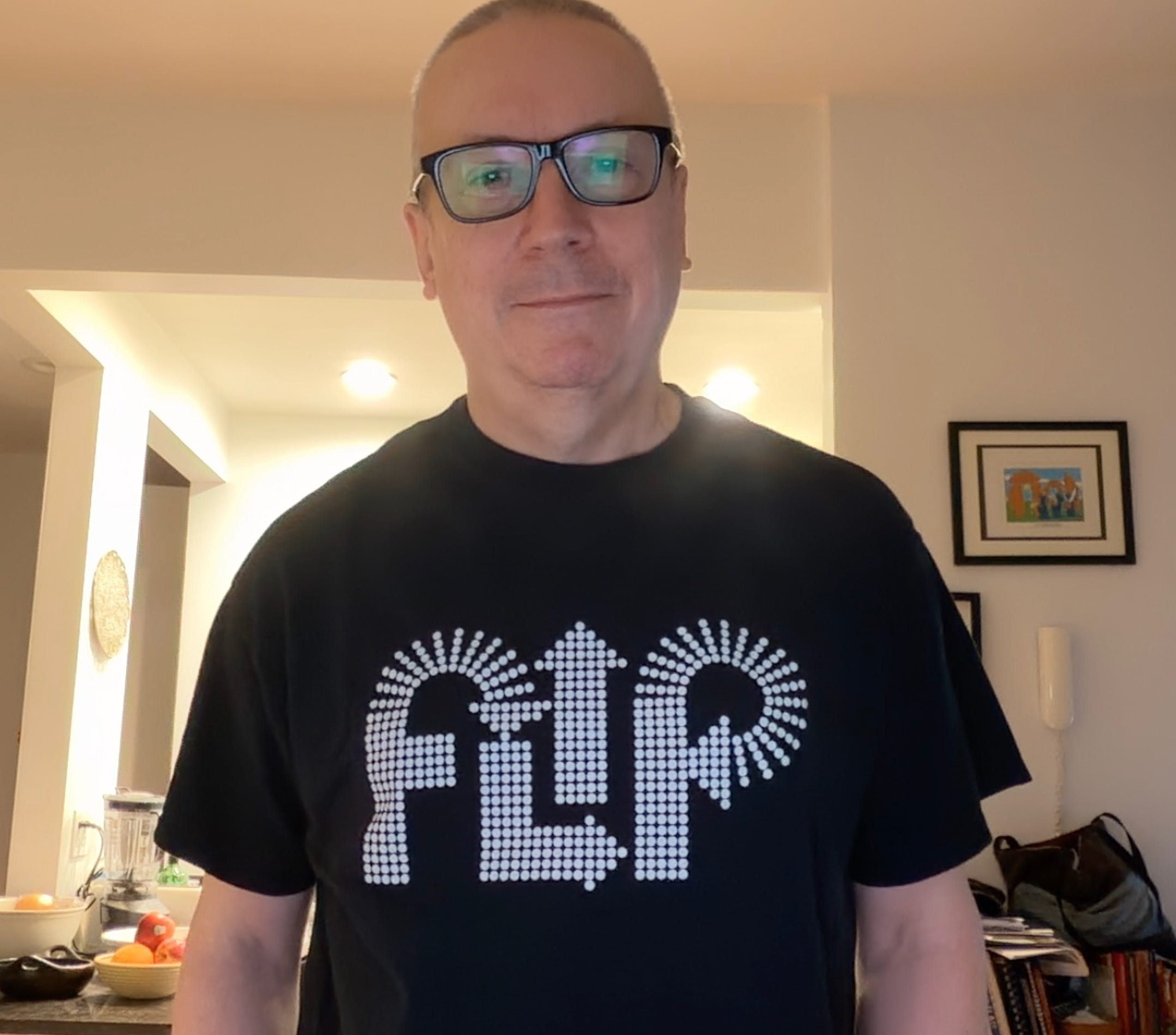
One day, some old man in my Harlem neighborhood will recognize the logo, and we’ll have a great conversation.
I loved Flip Wilson! Geraldine is still one of my favorite TV characters of all time. And ,strangely, a fairly attractive woman for a short Black man. In the late 90's I was at the hospital in the wee hours of the morning and saw "The Flip Wilson Show" on a television. There was the sudden realization that so many of his catchphrases had worked their way into my personal lexicon ("Don't touch me, you don't know me that well!") that persists to this day. You're right about his and others influence on rural white Americans to acknowledge, accept, enjoy, and celebrate Blackness. Well, some of us anyway. I had wondered what became of him and just hope through his troubles he could still find some happiness. He deserved that having made so many so happy.
I am coveting your t-shirt.
As a Boomer (b. 1963) I loved Flip Wilson and his alter ego Geraldine, and I agree he hasn’t gotten his historical due. Great comedian.